
There is perhaps no dental procedure more misunderstood than the root canal. For decades, it has been the punchline of jokes about pain and discomfort. However, thanks to modern dental advancements, the reality of this treatment is entirely different.
Today, root canal treatment is a routine, highly successful, and virtually painless procedure designed to do one primary thing: save your natural tooth from extraction.
If you’ve been experiencing persistent tooth pain, here is everything you need to know about how this therapy can restore your oral health and get you back to smiling comfortably.
What is Root Canal Treatment?
At its core, a root canal is a restorative procedure aimed at treating infection or inflammation at the very center of a tooth.
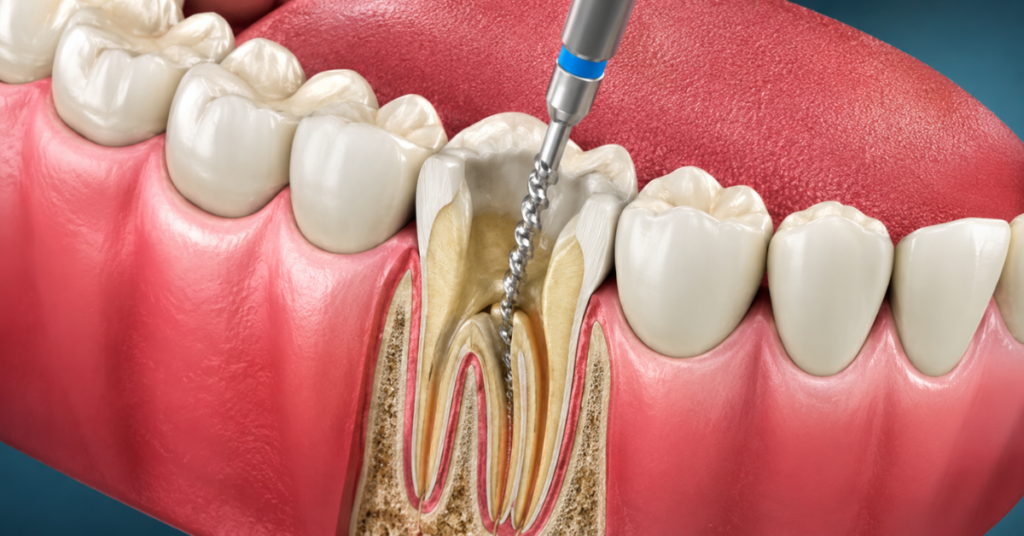
Every tooth contains a soft tissue core known as the pulp. This pulp houses blood vessels, nerves, and connective tissue that help the tooth grow during its development. Once a tooth is fully mature, it can easily survive without the pulp, because it continues to be nourished by the surrounding tissues.
When a root canal is performed, a dental specialist carefully removes the diseased or damaged pulp, cleans and disinfects the internal chambers of the tooth, and seals it to prevent future infection.
When Do You Need a Root Canal?
Dental pulp can become damaged or infected due to deep decay, repeated dental procedures on the same tooth, faulty crowns, or a crack/chip in the enamel. Additionally, a physical injury to a tooth can cause pulp damage even if there are no visible signs of a crack.
If you notice any of the following warning signs, it is crucial to schedule an evaluation immediately:
- Persistent Pain: Severe, deep throbbing pain in a specific tooth that doesn’t go away.
- Temperature Sensitivity: Lingering pain or sensitivity when you consume hot or cold foods and beverages.
- Swollen or Tender Gums: Swelling, redness, or a pimple-like bump (abscess) on the gums near the painful tooth.
- Tooth Discoloration: A tooth that has turned dark or grayish compared to the surrounding teeth.
- Pain Upon Pressure: Sharp pain when chewing, biting, or touching the affected tooth.
Note: Sometimes, a dying nerve stops hurting temporarily. However, this does not mean the infection has disappeared. Leaving it untreated can allow the bacteria to spread to the surrounding jawbone.
The Step-by-Step Procedure: What to Expect
At The Dentist India, we prioritize patient comfort and use state-of-the-art technology to ensure your treatment is efficient and stress-free. The entire process generally involves the following steps:
1. Diagnosis and Imaging
We begin with a thorough examination and digital X-rays to map the shape of your root canals and assess the extent of the infection in the surrounding bone.
2. Local Anesthesia
Before any work begins, local anesthesia is administered to completely numb the affected tooth and the surrounding area. You will not feel pain during the procedure. In fact, most patients report that it feels no different than getting a standard dental filling.
3. Pulp Removal
A small, protective sheet called a dental dam is placed over the area to keep the tooth isolated, clean, and dry. A tiny access opening is made in the crown of the tooth to reach the damaged pulp. Using precision instruments, the diseased tissue is gently removed.
4. Cleaning and Shaping
The hollow inner chambers and root canals are meticulously cleaned, flushed, and reshaped to ensure no bacteria remain.
5. Sealing the Tooth
Once the space is thoroughly decontaminated, the canals are filled and sealed with a biocompatible, rubber-like material called gutta-percha. The access opening in the tooth is then closed with a temporary or permanent filling.
6. Final Restoration (The Dental Crown)
Because a tooth without its pulp becomes more brittle over time, a final restoration is necessary. In most cases, a custom-made dental crown is placed over the tooth to protect it from fracturing, restore its full chewing strength, and bring back its natural appearance.
The Benefits of Choosing a Root Canal Over Extraction
When faced with a damaged tooth, some patients wonder if it’s simply easier to pull it out. However, preserving your natural tooth should always be the preferred choice.
| Feature | Root Canal Treatment | Tooth Extraction |
| Natural Preservation | Keeps your original tooth intact. | Leaves a gap that requires an implant or bridge. |
| Functionality | Maintains normal chewing alignment and biting force. | Can cause adjacent teeth to shift, altering your bite. |
| Aesthetics | Looks completely natural once crowned. | Requires artificial tooth replacement to restore your smile. |
| Cost-Effectiveness | A one-time procedure + crown. | Often requires expensive, multi-step implant surgeries later. |
Post-Treatment Care and Longevity
With proper care, a tooth that has undergone endodontic therapy can last a lifetime. For the first few days following your appointment, the tooth may feel slightly sensitive due to natural tissue inflammation, which can easily be managed with over-the-counter pain relievers.
To maintain your results, continue to practice excellent oral hygiene: brush twice a day, floss daily, and visit us regularly for professional cleanings and checkups.
Ready to Live Pain-Free?
Don’t let dental anxiety prevent you from getting the relief you deserve. Delaying treatment only increases the risk of tooth loss and systemic infection.
If you are experiencing tooth pain or want to learn more about our advanced root canal treatment options, contact The Dentist India today to schedule your consultation. Our expert team is here to restore your comfort and protect your smile.